1
Focus series
9.4
User’s manual
Focus series
User’s manual
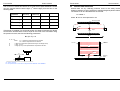
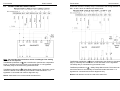
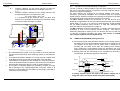
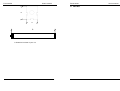
1. Application with two sensors:
CRITERIA FOR INSTALLATION
Connection of the muting sensors:
Direction allowed
All the muting sensors must be connected correctly in order to prevent their incorrect
placement from causing undesired requests for muting.
1. The muting sensors must recognise the whole length of the material (i.e.
pallets, vehicles, etc).
2. The sensors must be arranged so that the material is always recognised
throughout its transit through the protection barrier (grid/curtain).
3. The effect of various material transportation speeds during the duration of
muting must be taken into account.
4. The safety barrier (grid/curtain) and muting sensors must be arranged so
that the previous material clears the last muting sensor before the new
material reaches the first sensors.
24 VDC
MUTE A IN
Contact with A
B
MUTE B IN
A
S
to the Focus cable
d1 = D
Contact with B
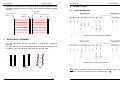
2. Application with four sensors and single direction for introduction of material:
Connection of the muting sensors:
24 VDC
Direction allowed
to the Focus
cable
Contact with A1
L
v
S
B2 A2
B1 A1
S
Contact with A2
MUTE A IN
Contact with B1
MUTE B IN
d1
D
Contact with B2
B2
A2
B1
A1
3. Application with four sensors and dual direction for introduction of material:
Connection of the muting sensors:
Installation example of barrier protection across a conveyor, which must allow a box to
pass through, but not a person. The protection barrier S is connected to the control
panel, and A1, A2, B1 and B2 sensors detect the passage of the box and enable the
muting function. The contacts from these sensors are connected to the protection barrier
receiver unit.
Sensors A and B can be optical, mechanical, proximity sensors, etc., having closed
voltage free contact when an object is detected.
The following pages show several examples of configurations using the muting
function:
Directions allowed
24 VDC
Contact with A1
L
A2 B2
S
B1 A1
to the Focus
cable
Contact with A2
MUTE A IN
Contact with B1
MUTE B IN
d1
D
Contact with B2
23
24