1
Template Preparation Methods
Single- and Refer to the Automated DNA Sequencing Chemistry Guide
Double-Stranded (P/N 4305080) for information on preparing single- and
Templates double-stranded templates.
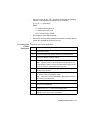
BAC DNA With larger DNA targets such as bacterial artificial chromosomes
Templates (BACs), the quality of DNA template is important to the success of the
sequencing reaction. Two methods have given good sequencing
results:
•
Alkaline lysis1, with extra phenol extraction and isopropanol
precipitation if very clean DNA is desired
•
Cesium chloride (CsCl) banding
Commercial Kits
Commercial kits are also available for BAC DNA preparation:
•
QIAGEN-tip 100 (QIAGEN: P/N 10043, 25 reactions; 10045,
100 reactions)
•
QIAGEN-tip 500 (QIAGEN: P/N 10063, 25 reactions; 10065,
100 reactions)
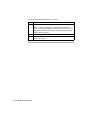
PCR Templates Cycle sequencing provides the most reproducible results for
sequencing PCR templates. Although PCR fragments can be difficult to
denature with traditional sequencing methods, cycle sequencing
provides several chances to denature and extend the template, which
ensures adequate signal in the sequencing reaction.
Importance of Purifying Product
For optimum results, purify the PCR product before sequencing. In
general, any method that removes dNTPs and primers should work. We
recommend Centricon®-100 columns (P/N N930-2119). The protocol
for using these columns is provided in “Purifying PCR Fragments.”
Refer to the Automated DNA Sequencing Chemistry Guide
(P/N 4305080) for information on sequencing PCR templates.
1. Marra, M., Weinstock, L.A., and Mardis, E.R. 1996. End sequence determination from
large insert cloning using energy transfer fluorescent primers. Genomic Methods
6: 1118–1122.
Preparing the Templates 2-3