1
One-Net Encoder features
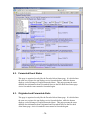
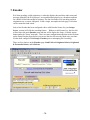
• Easy to use Web interface for creating and sending FCC EAS alerts.
• Web interface makes it easy to configure commonly used locations and alert
types.
• Web interface makes it easy to review and print logs of active and expired
originated alerts.
• All audio sections of encoded alerts are stored into separate digital audio files.
• Stores user configurable number of previous originated alerts.
• Supports multiple simultaneous active originated alerts.
• Configurable audio output port selection for originated alerts
• Automatic randomized Weekly test generation.
• User programmable length for FCC EAS 853 Hz and 960 Hz Two-tone Attention
Signal.
• Web interface upload feature for digital audio files facilitates encoding the EAS
audio portions.
• Supports direct recording of EAS alert audio into digital files.
• Audio output level control via web interface.
1.3. User Manual
Generally, One-Net screens are self-explanatory. The manual has a section for each
screen, which reviews information on the screens and provides additional
information. The index at the back will help you locate which screen has information
you are looking for.
2. The Emergency Alert System
2.1. Purpose
According to the FCC, "The EAS is designed to provide the President with a means
to address the American people in the event of a national emergency. Through the
EAS, the President would have access to thousands of broadcast stations, cable
systems and participating satellite programmers to transmit a message to the public.
The EAS and its predecessors, CONELRAD and the Emergency Broadcast System
(EBS), have never been activated for this purpose. But beginning in 1963, the
President permitted state and local level emergency information to be transmitted
using the EBS."
However, the EAS system is used for much more than to support a method of
communication that has never been (and hopefully never will be) used. The EAS
system provides state and local officials with a method to quickly send out important
local emergency information targeted to a specific area. This includes weather alerts
as well as local emergency alerts such as child abductions and disasters. The EAS
system also runs test alerts on a weekly and monthly basis in order to insure
operability.
-7-